Assessments

We start our intervention by assessing your child and families needs so that we can make sure our intervention is going to have the best outcomes for you and your child:

Ages & Stages . 3 Questionnaire (ASQ - 3) and Ages and Stages - Social Emotional (ASQ-SE): Are a screening and assessment parent-completed questionnaire that asks about everyday skills like talking, moving, solving problems, and playing. It usually takes about 30–60 minutes and is based on what you see your child doing at home. The answers help staff quickly check whether your child is on track, needs monitoring, or should be referred for a more detailed evaluation. Results are shared with you and used to guide next steps or supports if needed. The Ages & Stages Questionnaire - Social Emotional (ASQ-SE) asks parents about emotional and behavioural areas such as calming, sleeping, getting along with others, and managing feelings. It takes about 10–15 minutes and focuses on social‑emotional development rather than learning skills. Your responses help identify whether your child might benefit from strategies or further assessment for behaviour or emotion-related concerns. Staff will review results with you and recommend supports or referral if the screening shows risk.

Assessment Evaluation & Programming System (AEPS‑3): is a play-based, hands-on assessment used when a child may need more in-depth evaluation or services. An assessor observes your child doing small tasks and games and asks about daily routines; sessions typically last 60 minutes and can be split across visits. AEPS results are used to write practical, measurable goals and an individualized plan (IFSP/IEP) that fit your child’s daily life and learning needs. You are involved throughout—sharing information, helping during activities if you wish, and receiving clear recommendations for home and program supports.

Routine‑Based Interview (RBI): The RBI is a family-centred interview that explores your child’s typical daily routines (for example, meals, dressing, play, and community outings) and your priorities as a family. It takes about 2 hours and helps the team choose 3–4 meaningful, routine-focused goals that matter most to you. The information from the RBI is used to make goals and strategies that can be practiced naturally during your everyday activities, so intervention fits your family’s life.

Preschool Language Scale 5th Edition (PLS-5): We offer a communication and language screening assessment. Early screening catches communication delays or disorders when intervention is most effective. Identifying challenges early supports better learning, social interaction, and emotional development, and helps families access therapy, classroom supports, and community resources. Regular, accessible screening ensures children get timely help to reach their full potential. Our Screening Test quickly identifies infants, toddlers, and children up to 7 years 11 months who may be at risk for speech or language difficulties. We can administer this at our clinic, school, day care, preschool or Kindergarten.

Sensory Processing Measure - 2 (SPM-2) evaluates a child's sensory responses across multiple environments—primarily at home and school—providing a holistic view of their sensory experiences. It identifies strengths and challenges related to sensory processing, such as sensitivities, preferences, or difficulties with certain stimuli. This understanding helps in designing personalized strategies to support the child's emotional regulation, learning, and social participation. The SPM-2 is especially valuable for identifying sensory processing issues that might impact behaviour, focus, and overall well-being in children, help every child feel safe, understood, and supported.

Contact us today to learn more about how we can help you to make a difference!
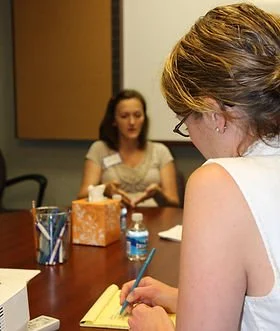
A woman taking notes at a table in a meeting room, with another woman sitting across from her.